Before moving on to the Cropping exercise, I thought it would be useful to reflect on a few points about composition and look at some general photographs that I've taken with the rules of composition in mind.

In this photo, I was mindful of the rule of thirds and wanted to place my son where he would touch on the lines, dividing the frame into the rule of thirds. He is off centre and placed in the lower right hand side of the frame, and crossing the mid, horizontal line. Ive attempted to retain, negative space in the rest of the frame. I think this image works well, it has plenty of dynamics going on, and is visually appealing.

In this image, I placed the boat in the top right hand side of the frame. Rangitoto Island, in the background provides a diagonal adding interest. I think this image works well, I did crop it however, as the Island, in full view, would have dominated the frame.


This is repeat of the above photograph. The yacht is in a slightly different position, ( I was travelling past it, on a passenger ferry) and the vignette effect helps to focus in on the yacht, adding a sense of drama.
Conclusion
I am growing in my awareness of placement within the frame. I used to photograph, with subjects dead centre which made for a dull static image... now I am consciously thinking about the dynamics of the frame, the various rules for dividing the frame, and the effect of vertical vs horizontal.
In the last few days, I thought I would revisit focal lengths and I in particular I set a task for myself which involved shooting images set to the widest angle i.e. shortest focal length which on my camera is 24mm. I wanted to see what effect a wide angel had on subjects at close range. I was particularly interested to see if I could achieve interesting distortions at close range.


I have managed to achieve some interesting distortions with subjects at close range - especially with architecture. The wide angel exaggerates or accentuates the perspective of the buildings. I would not usually have got this close up with a wide angel focal point, but here I think this focal length has produced dramatic results - which again is something to keep in mind when thinking about the frame and composition.
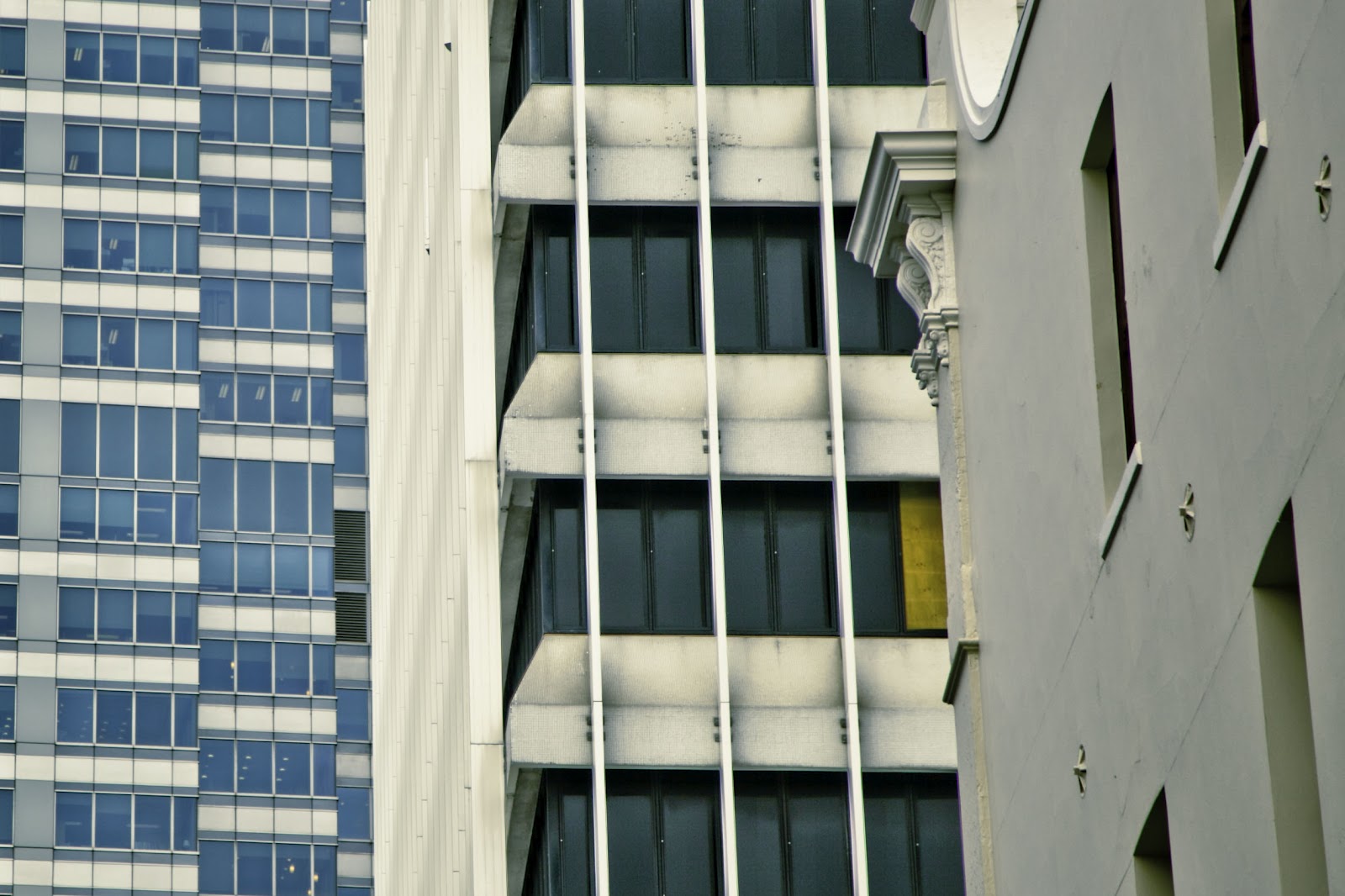
I repeated this exercise with my longest focal length, or telephoto lens. The longest focal length actually brings the subject closer. Telephoto lenses seem to distort in the opposite direction to wide angels.


 It is interesting to see how the telephoto focal length, actually compresses the image. This is particularly evident in the shot of the building above - which looks flat. I quite like the abstract effect this gives to the image.
I repeated this exercise with my longest focal length, or telephoto lens. The longest focal length actually brings the subject closer. Telephoto lenses seem to distort in the opposite direction to wide angels.